Blood
Blood contains plasma, red blood cells, white blood cells and platelets.
Platelet-rich plasma (PRP) is a preparation of plasma containing concentrated platelets, made from a sample of a person’s own blood. Autologous means taken from the same person.
PRP describes a preparation, not a single treatment. The device used to prepare it and the clinical procedure in which it is used are separate questions.
Blood contains plasma, red blood cells, white blood cells and platelets.
Plasma is the liquid part of blood. It contains water, salts and proteins.
Platelets help blood clot. PRP preparation concentrates platelets in plasma.
Centrifugation means spinning a sample to separate its components. After separation, the platelets must be mixed back into the plasma: this is re-suspension, also called homogenization in the supplied diagram.
This is an educational overview of the illustrated RegenKit process. Tube volumes, centrifuge settings, mixing and handling depend on the exact device. Follow its instructions for use.
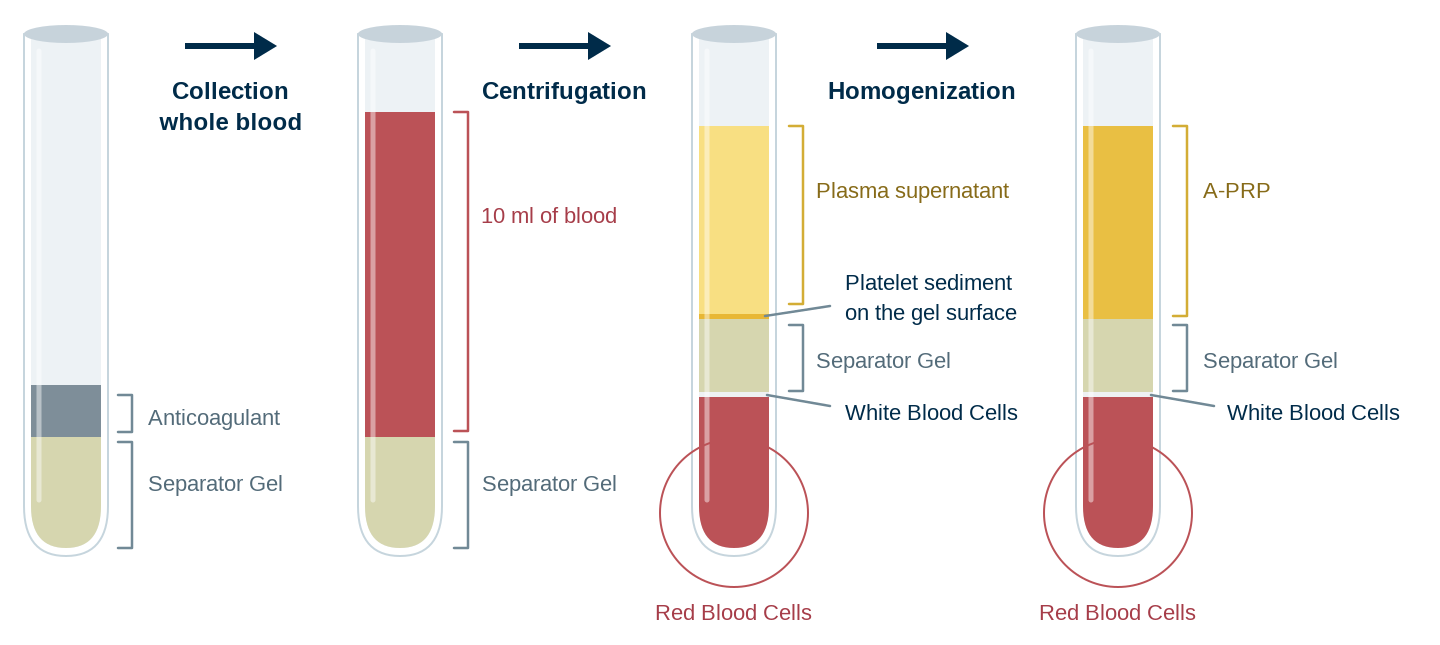
A blood sample is collected into the preparation tube.
Centrifugation separates components by density. The separator gel forms a barrier between the red-cell fraction and the plasma above it.
Mixing returns the platelet sediment to the plasma, producing the PRP preparation shown in the final tube.
RegenLab’s illustrated technology uses a physical separator gel and sodium citrate, an anticoagulant that helps prevent clotting during preparation. The closed preparation system limits transfers between open containers.
The separator gel is a device component; it is not the PRP preparation. Plasma and platelets above the gel are collected according to the device instructions.
A study investigates a specified preparation, procedure and patient population. Its findings should not be applied automatically to every PRP device, condition or patient. In the U.S., consult the applicable device labeling alongside the clinical evidence.